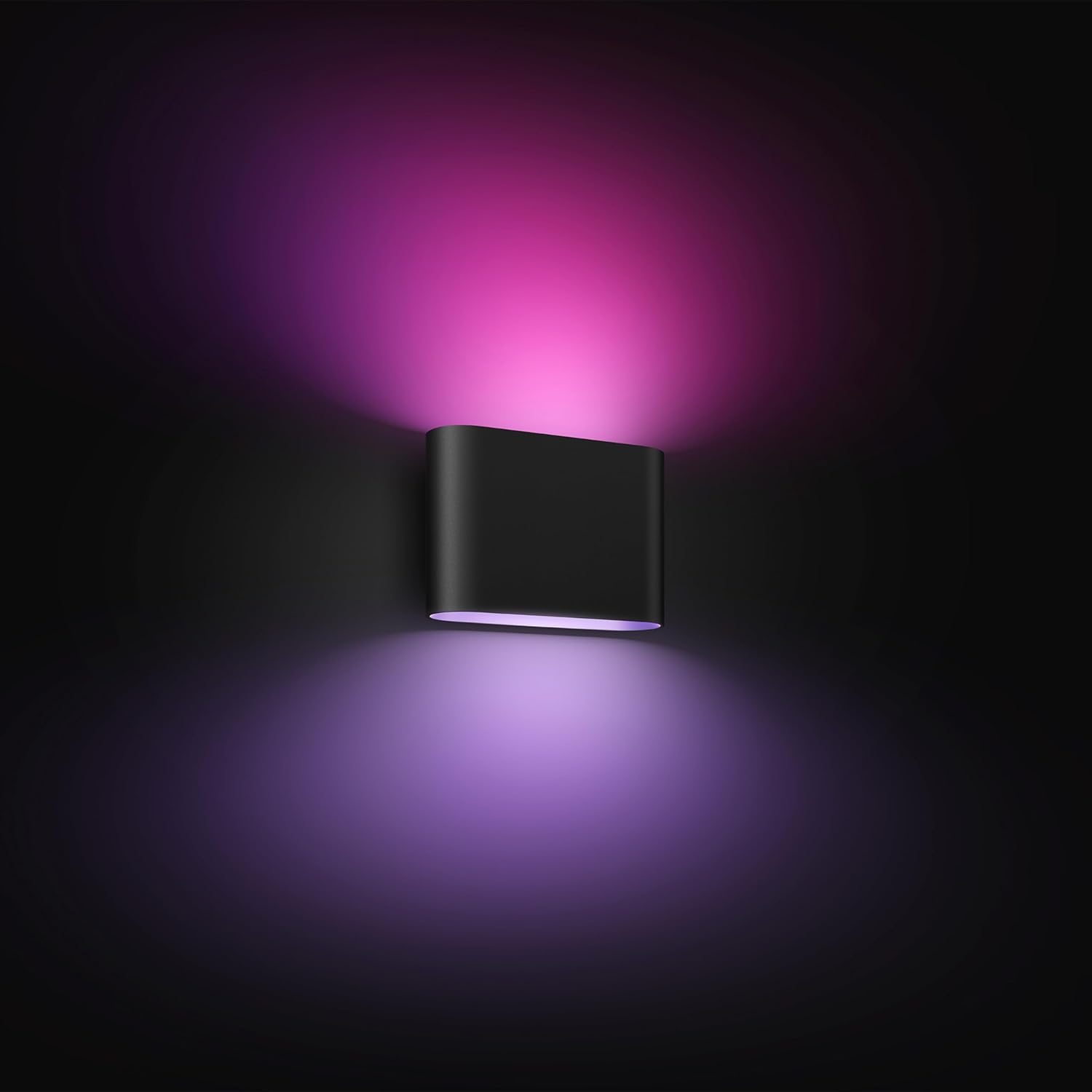
You picked a gorgeous wall sconce — aged brass, maybe, or matte black — and now you’re wondering if you should wire it to a smart system that lets you change its color, set schedules, and control it from your phone. That’s the promise of smart lighting: fixtures that respond to your life instead of just sitting there looking pretty. But the moment you start comparing systems, you hit a wall of brand names, hub requirements, and price tiers that seem designed to confuse. This guide cuts through that. We’ll compare two major categories — dedicated smart ecosystems like Philips Hue and budget-forward color-changing systems like Govee — and give you a clear decision framework for which one fits your project, your budget, and your long-term goals.
What You’re Actually Choosing Between
When people ask “should I go Govee or Hue?” they’re really asking a more fundamental question: do I want a lighting ecosystem or a lighting product?
Philips Hue is an ecosystem. Every bulb, strip, gradient tube, and wall switch communicates through a Zigbee mesh network (a low-power wireless protocol designed specifically for smart home devices) and optionally through the Hue Bridge — a small hub you plug into your router. That hub is what enables fast local control (no cloud dependency), Matter compatibility (the new cross-brand smart home standard backed by Apple, Google, Amazon, and Samsung), and professional-grade scene programming through the Hue app. As of 2026, Wirecutter’s smart bulb coverage consistently names the Hue ecosystem as the benchmark for reliability and integration depth.
Govee is a product line — a large and expanding one, but a product line nonetheless. Govee’s strength is color-changing impact at a low cost per foot or per fixture point. Their RGBIC strips (RGB stands for red-green-blue, the color model; the “IC” means individual control so different segments of one strip can show different colors simultaneously) are widely reviewed as delivering genuinely impressive visual effects. Apartment Therapy’s coverage of smart light strips notes that Govee’s RGBIC products consistently surface in best-of lists for renters and visual accent seekers who want wow factor without a major investment.
The tradeoff is ecosystem depth. Govee operates primarily through its own app and relies heavily on cloud connectivity. Local control — the ability to run your lights without an internet connection — is limited compared to Hue. Integration with Lutron Caséta or a Crestron/Control4 system for a whole-home build? Currently not in Govee’s lane.
The Core Comparison: Four Dimensions That Actually Matter
1. Color Quality and Rendering
This is where most buyers assume Govee and Hue are comparable because both advertise “16 million colors.” They’re not the same.
Philips Hue’s premium bulbs and fixtures use a combination of RGB plus a white-ambiance channel — sometimes labeled RGBW or RGBWW — which gives them the ability to produce accurate whites across the full 2200K–6500K range (Kelvin is the unit for color temperature: lower numbers are warm amber, higher numbers are cool blue-white daylight). The result is that Hue bulbs are genuinely useful for task lighting, reading light, and circadian-rhythm tuning (shifting from warm evening light to bright daytime light on a schedule), not just decorative color play.
Govee’s RGBIC strips produce saturated, vivid colors extremely well. Per the manufacturer’s published specs and consistent owner reports across review aggregators, their color vibrancy at the accent and backlighting tier is hard to beat at the price. But their white-light accuracy is a known limitation — mixed-RGB “white” doesn’t match a true warm-white LED. For wall sconces serving as primary or task light sources, that matters. For bias lighting behind a TV or color-wash accent on a bookcase, it largely doesn’t.
If the sconce is doing real work — illuminating a hallway, providing bedside reading light, acting as part of a layered scheme — Hue’s white-ambiance quality is worth the premium. If the fixture is purely decorative accent, Govee’s color rendering is more than adequate.
2. Ecosystem Lock-In and Future Compatibility
This is the dimension most buyers underweight until they’re two years into a system.
Hue’s adoption of the Matter standard (ratified by the Connectivity Standards Alliance and discussed extensively in This Old House’s smart home coverage) means Hue bulbs and fixtures can now be controlled natively by Apple Home, Google Home, Amazon Alexa, and Samsung SmartThings without needing the Hue Bridge as a mandatory intermediary. That’s a meaningful hedge against being stranded if Philips ever changes its software strategy.
Govee’s ecosystem is more closed. The Govee Home app works well, and Alexa/Google voice control is supported, but deep cross-platform automation is limited. If you’re building toward a Lutron RadioRA or a full Control4 integration at a later stage, Govee products won’t join that party. Architectural Digest’s smart lighting overview notes this as the central tension for buyers who are “design-forward today but automation-forward tomorrow” — starting with a closed budget ecosystem can mean a painful swap-out later.
3. The Fixture Compatibility Problem (This One Trips People Up)
Here’s something both ecosystems share as a challenge: smart bulbs require non-smart switches.
If you install a Hue bulb or a Govee color bulb in a wall sconce and then wire that sconce to a standard dimmer switch, you will get problems — flickering, premature bulb failure, inconsistent dimming, or the smart features cutting out entirely. Smart color-changing bulbs need constant power; the “on/off” and dimming control happens in the app or through a smart switch that communicates with the bulb directly, not by cutting the power line.
The solutions differ by ecosystem:
- Philips Hue: Hue Dimmer Switches (battery-operated, no wiring needed) or full Lutron Caséta integration via a Pico remote paired to a Caséta switch. The Caséta + Hue pairing is well-documented and widely used — the Caséta switch controls power while Hue scenes handle dimming.
- Govee: Smart switch compatibility is more limited. Most users control Govee via the app, schedules, or voice. Physical switch control beyond “dumb on/off” is not a strong suit.
For a design-conscious sconce installation where a wall switch is expected — by guests, by family members, by resale logic — this compatibility question deserves a decision before you buy.
4. Price Architecture
| Tier | Govee | Philips Hue |
|---|---|---|
| Entry color accent strip (6.5 ft) | ~$25–$45 | ~$45–$80 (Hue Gradient strip) |
| Single color-capable bulb (A19/BR30) | ~$12–$18 | ~$45–$60 |
| Smart hub/bridge | None required | Hue Bridge ~$60 (optional but recommended) |
| Full bedroom sconce setup (2 bulbs + dimmer) | ~$50–$70 total | ~$160–$220 total |
Per published specs and current retail pricing as of May 2026, the Govee entry cost is roughly one-third to one-half of a comparable Hue setup. The Energy.gov LED lighting guidance notes that all-LED systems — smart or otherwise — deliver operating cost savings over incandescent regardless of brand tier, so the ongoing cost difference between Govee and Hue is minimal once installed. The premium is in the upfront hardware.
The Mid-Tier Option You’re Probably Overlooking
If Hue feels like overspending and Govee feels underpowered for your integration goals, the middle of the market has gotten more interesting in 2025–2026.
LIFX remains a hub-free alternative that communicates over Wi-Fi directly and supports Matter. Color accuracy is competitive with Hue’s RGBW line, and the LIFX Candle Color — designed specifically for candelabra-socket sconces common in hallway and dining fixtures — is a product category Hue has historically underserved. Owners consistently report that LIFX’s white-ambiance quality is close to Hue’s at slightly lower per-bulb prices.
Nanoleaf Essentials (Matter-enabled, Thread-compatible) is another mid-tier option for buyers building Apple Home or Google Home ecosystems who want solid color plus white ambiance without the Hue Bridge investment.
Neither is a perfect Govee competitor on raw color-saturation drama, and neither matches Hue’s ecosystem depth for professional whole-home integration. But for a design-focused homeowner doing two or three rooms with good smart home integration expectations, they’re worth a serious look.
Decision Framework: If X, Then Y
You’ve read the tradeoffs. Here’s how to resolve them:
If your sconces are purely decorative accent lights (bookcase uplights, TV bias lighting, architectural color wash) and you’re not building toward a larger smart home system → Govee RGBIC is the honest recommendation. The color impact is real, the price is right, and you’re not paying for ecosystem features you won’t use.
If your sconces are part of a layered lighting scheme (ambient + task + accent) and white-light quality matters for reading or daily use → step up to Hue or LIFX. The white-ambiance accuracy is a genuine functional difference, not just a spec-sheet number.
If you’re specifying for a client or building toward Lutron Caséta / RadioRA integration → Hue is the only choice in this comparison that has a documented, professionally-supported integration path. Govee doesn’t belong in that spec.
If budget is the hard constraint and you want maximum color impact per dollar → Govee for accent, and save the Hue investment for the fixtures that need accurate white light (bedside, kitchen, workspace).
If you’re uncertain about physical switch compatibility in an existing installation → solve the switch question before you buy any smart bulb. A Lutron Caséta dimmer with a Pico remote on the wall gives you physical control of any smart bulb brand without cutting power to the bulb.
One Mistake Worth Avoiding
The most common misstep in smart sconce planning isn’t choosing the wrong brand — it’s treating smart lighting as a bulb decision rather than a system decision. The bulb is the last piece. Before you order anything, map out: How will it be physically switched? What voice assistant or hub is already in the space? Do you need white-light quality, color saturation, or both? Will this eventually be part of a larger automation?
Answer those questions first, and the brand decision becomes almost mechanical. As Wirecutter’s smart bulb coverage puts it plainly: the best smart bulb is the one that fits your existing ecosystem without requiring you to buy into a new one.
The premium is worth it when it buys you integration, accuracy, and longevity. It’s not worth it when it just buys you a brand name on a feature you’ll never use.