Your kitchen island has a lighting problem that a new smart bulb probably won’t fully fix — and if you’ve just moved into a new-build home, you already know exactly what that problem feels like. The recessed cans overhead look fine on the contractor’s plan, but once the cabinets go in and you start actually prepping food, you realize the overhead grid wasn’t designed with your island in mind. Pendant lights — single fixtures that hang on a cord or rod directly over an island or dining surface — are the standard solution. The decision that trips people up is what kind of “smart” to put in them: do you buy a plain pendant and drop in a color-changing smart bulb, or do you spend more on a pendant that has the intelligence built directly into the fixture itself? This article walks through exactly that tradeoff, names the math, and ends with a decision rule you can use today.
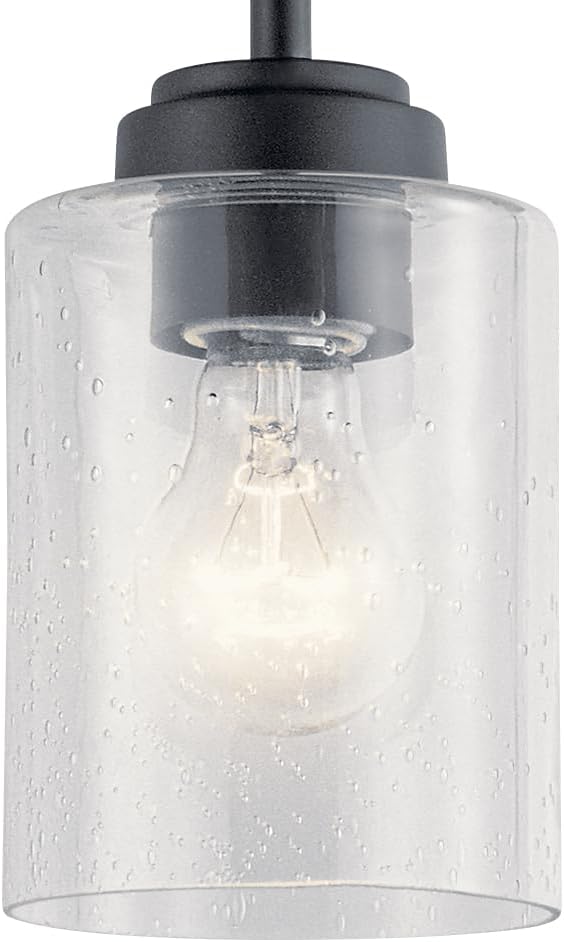
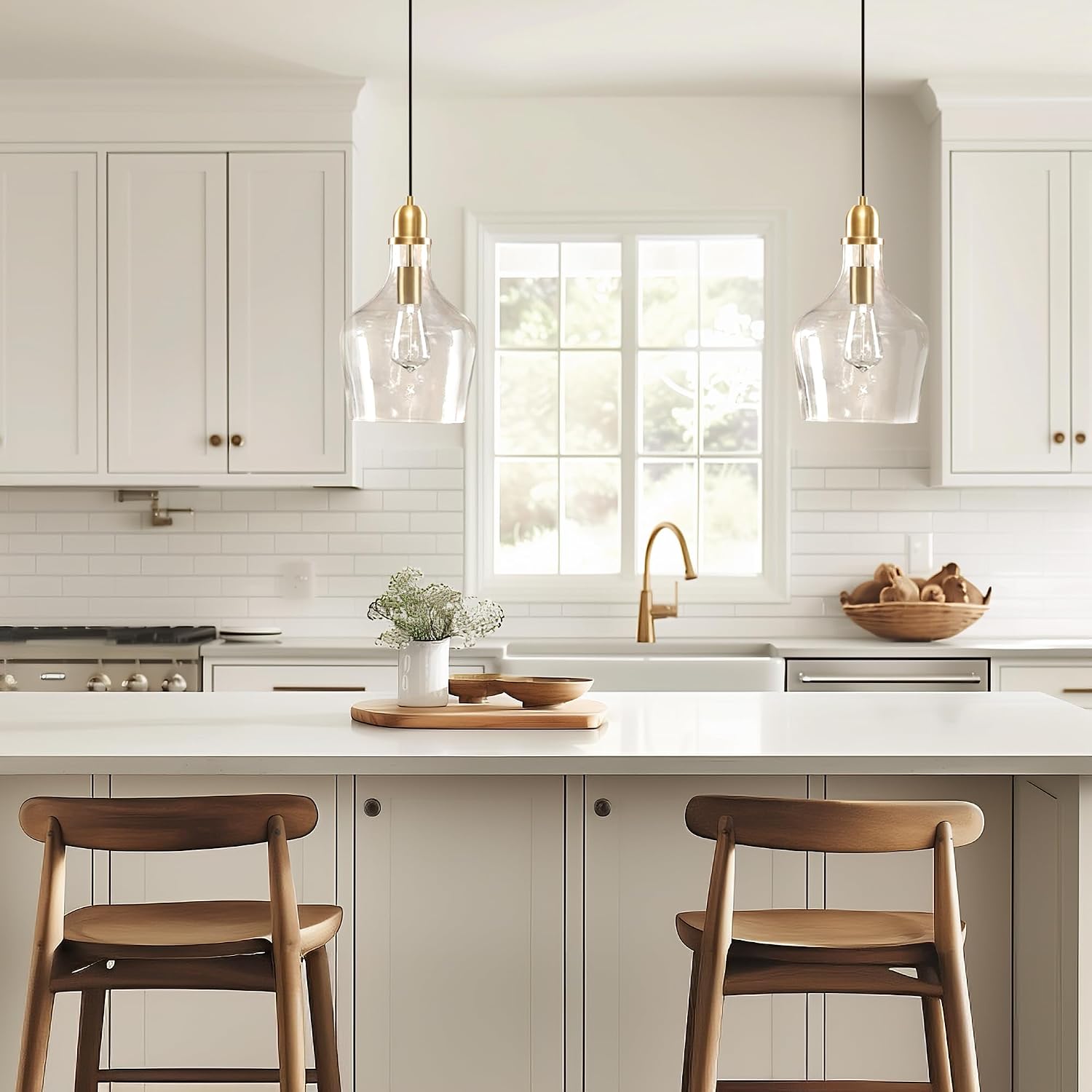
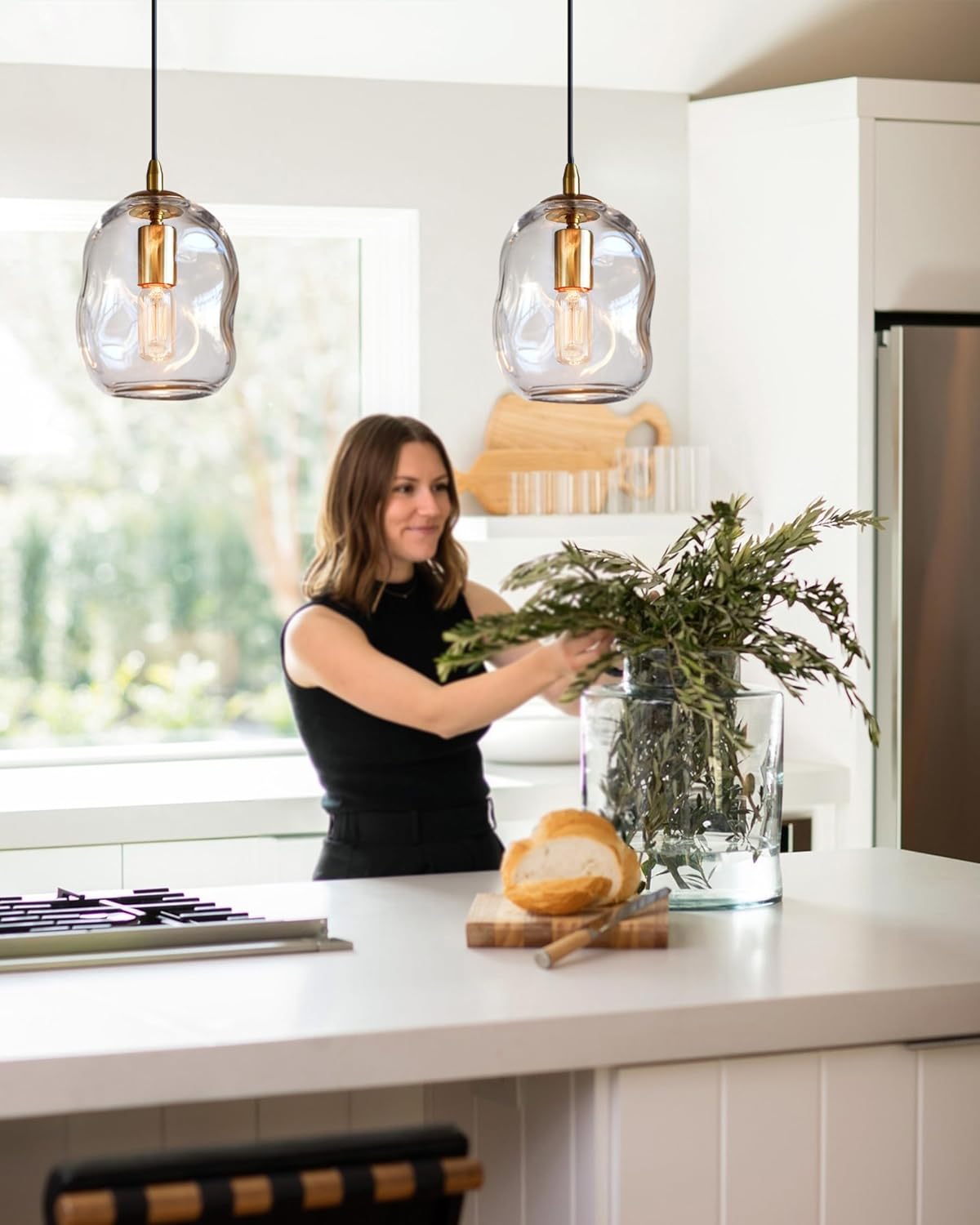
| EDITOR'S PICK[CASAMOTION Pendant Lights Kitch…](https://www.amazon.com/dp/B08TX4F9LG?tag=greenflower20-20) | Mid-tier[INK+IVY Auburn Pendant Lighting…](https://www.amazon.com/dp/B0D36BDV5N?tag=greenflower20-20) | Budget pick[Kichler Winslow 1-Light Mini Pe…](https://www.amazon.com/dp/B0CPM9YK4Z?tag=greenflower20-20) | |
|---|---|---|---|
| Glass Type | Clear | Hand-blown | Clear Seeded |
| Diameter | 8 in | 9 in | 7.5 in |
| Height | — | 95.5 in | 4.25 in |
| Finish | Brass Gold | Gold | Black |
| Pack Size | 2 | 1 | 1 |
| Price | $139.50 | $85.65 | $66.08 |
| See on Amazon → | See on Amazon → | See on Amazon → |
The Real Problem: Builder-Grade Recessed Lighting Was Never Enough
This is worth validating before getting into product comparisons, because it changes what you’re actually shopping for.
Architectural Digest, in its guide “How to Light a Kitchen Island,” notes that builder-grade recessed lighting is typically planned for general ambient coverage — not task lighting over a specific work surface. The cans are spaced for the room, not for your 36-inch island. The result: you have overhead light, but it arrives from the wrong angle, creating shadows exactly where you’re chopping vegetables or reading a recipe.
Pendant lights solve this by bringing the light source down — typically to 30–36 inches above the countertop surface, as This Old House’s pendant sizing guidance recommends — and positioning it directly over the work zone. That proximity matters more than raw lumen count. An 800-lumen pendant at 32 inches does more useful work than a 1,400-lumen recessed can at nine feet hitting the island at a steep angle.
Apartment Therapy’s layered kitchen lighting coverage frames this well: recessed lighting is your ambient layer; pendants are your task layer. If you’re treating them as redundant, you’re missing the point of the second layer entirely.
So the real question isn’t “should I get pendants?” — it’s “should the pendants themselves be smart, or should I just put a smart bulb inside a standard pendant?”
The Numbers Behind the Decision
Before comparing products, it’s worth establishing what the lighting actually needs to accomplish at the island surface.
Energy.gov’s “Lighting Choices to Save You Money” recommends approximately 50 lumens per square foot for kitchen task surfaces. A standard 36-inch island section is roughly 6–8 square feet, suggesting 300–400 lumens needed per section at the counter surface. A 1,300-lumen integrated smart pendant at the correct hang height — 30–36 inches above the counter, per This Old House’s sizing guidance — delivers that comfortably with meaningful headroom.
Where owners run into trouble is hanging the fixture too high, which reduces effective lumens on the surface dramatically. The inverse square law is unforgiving: double the distance from source to surface and you get one-quarter the light intensity at that surface. At the correct height, 1,300 lumens is adequate for most prep tasks. For a longer island or a serious cooking household, two pendants spaced 24–30 inches apart is the standard approach.
These numbers also matter for evaluating smart bulb options: a smart bulb rated at 800 lumens installed in the right pendant at the right height can do real task lighting work. A 1,600-lumen bulb hung at the wrong height often cannot.
Three Approaches to Smart Island Lighting
The market for smart kitchen island lighting has settled into three recognizable tiers. Each one involves a real tradeoff — not just a price difference — so the comparison below identifies exactly what you give up and gain at each level.
Budget Approach: Color-Changing Smart Bulb in a Standard Pendant
A color-changing LED bulb — one that shifts between warm white, daylight white, and RGB colors via an app — dropped into a pendant you already own or a basic new fixture costs $15–$45 for the bulb and whatever the shade costs separately. Connection stability varies by brand; many mid-range Wi-Fi bulbs use proprietary protocols that require a brand-specific app and can drop from the network after power outages.
The core limitation is optical: shade material acts as a filter. A color-changing bulb inside an opaque or semi-opaque shade loses saturation because color mixing happens inside the bulb globe and then has to pass through a shade that absorbs part of the spectrum. Colors look muddy rather than vivid. For warm white dimming and basic scene control — the two things most households actually use — this approach is often sufficient. For vivid color accent work, it underdelivers.
Best for: Renters who can’t swap fixtures; households already invested in a specific bulb ecosystem (Philips Hue Bridge owners, for instance, can add a Hue White Ambiance or Hue Color bulb to a new pendant and keep everything in one app); anyone who owns a pendant they love and doesn’t want to replace it.
Kichler
$66.08
In stock on Amazon
Check price on AmazonMid-Tier Approach: Standard Pendant with a Matter-Certified Smart Bulb
Spending $30–$60 on a Matter-certified smart bulb — rather than a proprietary Wi-Fi bulb — solves the connection reliability problem without requiring you to replace the fixture. Matter, the smart-home connectivity standard backed by Apple, Google, Amazon, and Samsung and finalized in 2022, allows devices to communicate directly over your local network using a standardized protocol. This means faster reconnection after outages, compatibility across Apple Home, Google Home, and Amazon Alexa without a brand-specific bridge, and less dropout overall.
The optical limitation remains: the bulb’s color output is still filtered through whatever shade you’ve chosen. Clear or lightly frosted glass globes transmit color best; milk glass and opaque metal shades will wash colors toward warm white regardless of what the bulb is doing. For households where warm white dimming is the primary use and color is occasional, this is a meaningful upgrade over the budget tier at a modest price increase.
Best for: Households starting fresh on smart lighting without an existing ecosystem; new-build owners who want hub-free setup and broad compatibility but prefer to choose their own pendant design independently of the bulb decision.
INK+IVY
$85.65
In stock on Amazon
Check price on AmazonPremium Approach: Integrated Smart Pendant with RGBIC Technology
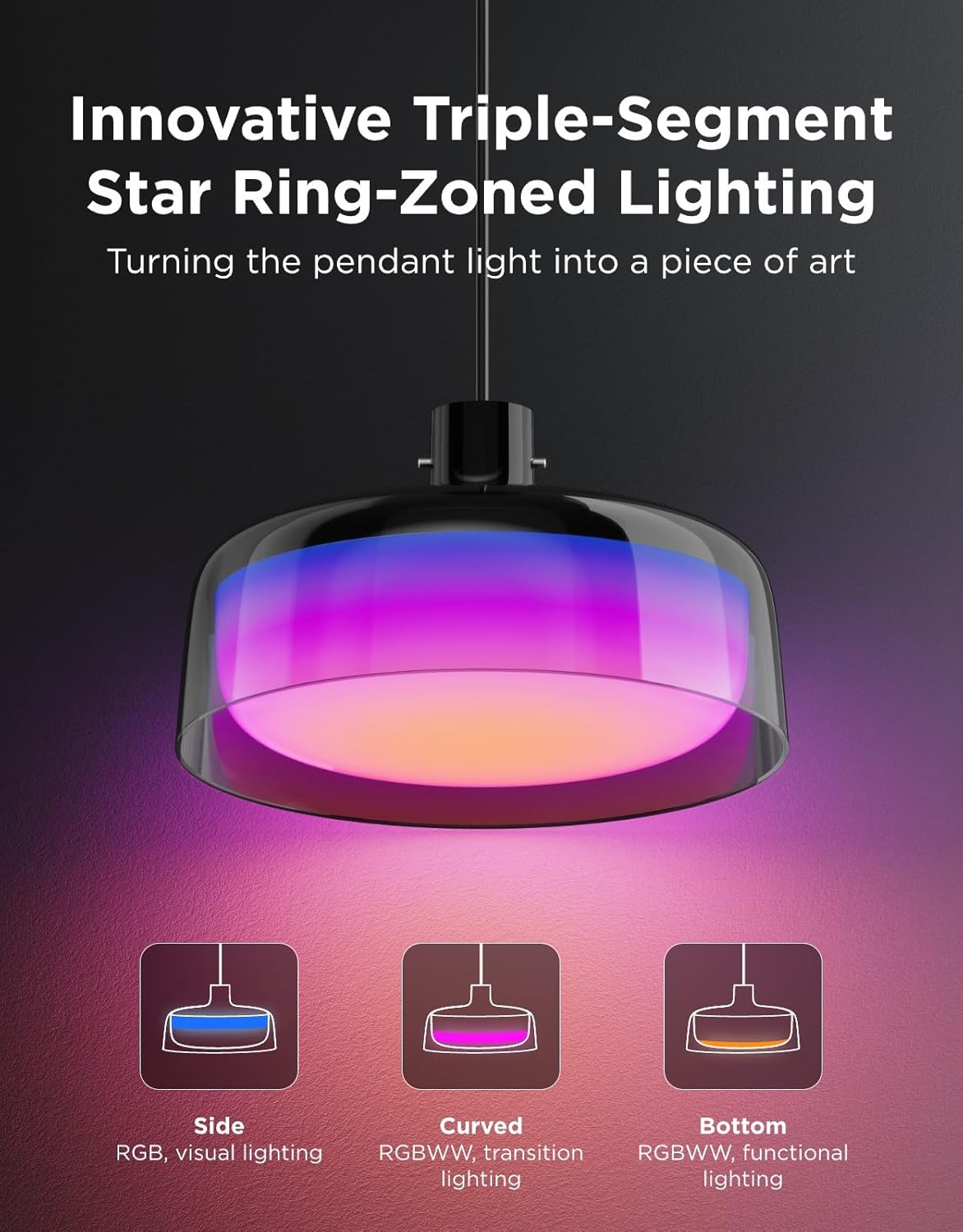
A purpose-built smart pendant — such as Govee’s Smart Pendant Light, which uses a multi-segment RGBIC design — solves both the optical and connectivity problems in a single fixture decision. RGBIC means each LED segment in the fixture can display a different color independently, unlike a basic RGB bulb where the entire bulb is one color at a time. Because the light source architecture is designed as part of the optical system rather than retrofitted into a generic shade, color rendering is vivid rather than filtered.
Owners of integrated smart pendants typically describe using them in two modes: bright, high-CRI white (typically 4000K–5000K) for food prep and task work, and warm or colored accent mode for evenings — dimmed amber, soft rose, or a static color that shifts the island from a work surface to a social one. This two-mode pattern is the core value proposition, and it’s genuinely different from what a smart bulb inside a standard shade achieves.
Matter certification on an integrated fixture carries the same protocol advantages as a Matter-certified bulb — direct local network communication, cross-ecosystem compatibility, reliable reconnection — but applies to the fixture as a whole rather than requiring you to source a compatible bulb separately. Per Govee’s published app documentation, users can group up to six Govee smart devices, including pendants, and control them simultaneously as a single unit. Scene changes, brightness adjustments, and mode switches apply to all grouped fixtures at once, which is exactly the behavior a two- or three-pendant island run requires.
Best for: New-build or renovation installs where the recessed grid is underwhelming and the fixture is being specified from scratch; households that want vivid dual-mode performance — task lighting for cooking, vivid color accent for evenings — rather than warm white dimming alone; anyone prioritizing Matter interoperability across Apple Home or Google Home from day one.
CASAMOTION
$139.50
In stock on Amazon
Check price on AmazonThe Cord-Length Problem: A Real Cautionary Tale
This is practical enough to deserve its own section because the mistake is nearly irreversible without an electrician.
Most pendant lights ship with excess cord length — often 60 to 72 inches — that you trim to achieve the right hang height. The calculation seems simple: ceiling height minus desired fixture height equals cord length to keep. But owners consistently underestimate it because they measure from the ceiling box to where they want the bottom of the shade, forgetting to account for the canopy depth, any in-line hardware, and the fixture body above the shade.
The result: a pendant hanging six or more inches higher than intended, pushing it above the useful task-lighting zone. As noted above, that extra distance has a compounding effect on light intensity at the counter surface. At nine-foot ceilings, the difference between a pendant at 30 inches above the counter and one at 36 inches is meaningful both for light intensity and for visual proportion — proportions that Architectural Digest’s kitchen lighting guidance identifies as one of the most common pendant installation errors.
The practical rule: before cutting, hang the pendant temporarily at the intended height using a clip or painter’s tape to mark the cord. Then add three inches as a buffer before you cut. Cords on most residential pendants cannot be extended after cutting — the wiring is integrated, and re-terminating it requires a licensed electrician and new strain-relief hardware to maintain code compliance and the fixture’s safety rating. If you’ve already cut too short, your options are raising the ceiling box (requires an electrician), using a swag hook to reposition the fixture laterally, or accepting the height and compensating with supplemental under-cabinet task lighting.
Frequently Asked Questions
Can I use a color-changing smart bulb in any pendant light, or does the shade type affect color output?
Shade type directly affects color output. An opaque shade — metal, ceramic, dense fabric — will block most of the color and you’ll see only what escapes through the bottom opening. A translucent or clear glass shade transmits color more fully, though it still mixes and softens it. For vivid, saturated color with a smart bulb, a clear or lightly frosted glass globe gives you the best result. Milk glass and hand-blown art glass will wash colors toward warm white regardless of what the bulb is doing — the diffusion that makes them beautiful for dining atmosphere works against color rendering.
What happens if I cut my pendant cord too short — can it be extended?
In most residential pendants, no — not without an electrician. The cord contains integrated wiring that terminates at the canopy and at the socket using a specific gauge and strain-relief design the manufacturer specifies for safety. Adding length requires re-wiring the fixture, which must be done by a licensed electrician to maintain code compliance and the fixture’s safety rating. Measure twice, add a buffer, then cut.
How many smart pendants can I control together as a group?
This varies by ecosystem. Per Govee’s published app documentation, Govee’s smart lighting app allows users to create groups of up to six devices — including pendants — and control them simultaneously as a single unit. Apple Home, Google Home, and Amazon Alexa all support room-based grouping as well, so Matter-certified fixtures from any brand can be grouped and controlled together using a voice command or scene trigger.
Do smart pendant lights work without a hub, or do they require a separate bridge?
It depends on the ecosystem. Matter-certified pendants and bulbs connect directly to your Wi-Fi router and work with Apple Home, Google Home, and Amazon Alexa without any additional bridge hardware. Philips Hue fixtures require the Hue Bridge for local processing and full feature access — though limited Bluetooth control works bridge-free at close range. If you want hub-free setup with broad ecosystem compatibility, Matter-certified Wi-Fi fixtures are the clearest current path.
Is 1,300 lumens enough for kitchen island task lighting?
At the correct hang height of 30–36 inches above the counter, yes — for most prep tasks on a standard island section. Energy.gov’s task lighting guidance puts 50 lumens per square foot as the standard for kitchen task surfaces, placing a 6–8 square foot island section at 300–400 lumens needed — well within what a 1,300-lumen fixture delivers when properly positioned. Hang it too high and the same fixture becomes insufficient; the physics are not negotiable.
The Decision Rule
If your existing recessed lighting is adequate and you already own a pendant you like: swap in a Matter-certified smart bulb. Match the bulb’s color temperature to your existing fixtures — typically 2700K–3000K for residential kitchens — and prioritize connection stability over color range. The mid-tier approach gives you broad ecosystem compatibility without replacing the fixture.
If you’re specifying pendants from scratch in a new-build or renovation, the recessed grid is underwhelming, and you want the fixture to do real dual-mode work — task lighting for cooking, vivid color accent for evenings: buy an integrated smart pendant with RGBIC technology and Matter certification. The color rendering problem and the connection reliability problem are both solved in one fixture decision. Measure your cord length twice before you cut.